These articles, concepts, and terms appeared in the news in February 2026. This post is updated daily to include exam-relevant information drawn from various media publications and Government of India (GoI) announcements.
UAE-India corridor
- Deepening bilateral trade and strategic partnerships between UAE and India
- India and the UAE reached a $100 billion bilateral trade milestone five years ahead of the 2030 target set by the CEPA (2022).
- The Abu Dhabi Investment Authority became the first sovereign wealth fund to establish a base in India’s GIFT City.
- Bharat Mart is under construction in the UAE to serve as a wholesale hub for Indian goods targeting Africa, West Asia, and Eurasia.
Herath
- Herath is the local name for the Mahasivaratri festival in Kashmir.
- A unique tradition involves the preparation of mutton and fish dishes, unlike the vegetarian fasting observed in most of India.
- The festival is associated with the exchange of dried walnuts and nadru (lotus stem) between communities.
Magh Mela
An annual religious festival held at the Sangam (confluence of Ganga, Yamuna, and mythical Saraswati) in Prayagraj. This year saw record participation, coinciding with Maha Sivaratri
Indus basin water flows rose while Ganga declined
- A study (1980–2021) reports contrasting hydrological trends: Indus basin streamflow increased ~8%, while the Ganga basin declined ~17%.
- In the Indus basin, rising precipitation—linked to western disturbances and monsoon variability—has increased flows, particularly in the main Indus and western tributaries (Jhelum, Chenab); however, eastern tributaries (Ravi, Sutlej) show decline.
- In the Ganga basin, rainfall has declined (~10%), temperatures and atmospheric water demand have risen, intensifying hydrological stress.
- Groundwater extraction for irrigation is identified as the dominant factor behind declining Ganga flows:
- Groundwater contributes 50–70% of annual river flow in parts of the basin.
- About 60–80% of streamflow decline in major sub-basins is attributed to pumping, including during drought years.
- In stretches of the Yamuna and upper Ganga, flow reversal has occurred, with rivers losing water to depleted aquifers.
- These shifts have implications for the 1960 Indus Waters Treaty, as changing climate patterns and human water use may affect long-term water-sharing assumptions.
Bamboo to fuel Bioethanol plant in Assam
- After a 2022 amendment to the Assam Fixation of Ceiling on Land Holding Act, 1956, Assam has permitted tea gardens to use up to 5% of their land for non-tea purposes, enabling diversification.
- Tea estates within a 300-km radius of the Numaligarh bioethanol plant are cultivating bamboo as feedstock.
- 2G bioethanol plant at Numaligarh, set up by Assam Bio Ethanol Private Limited (a joint venture of Numaligarh Refinery Limited, Chempolis Oy–Finland, and Fortum), is the world’s first commercial-scale bamboo-based ethanol plant.
- The plant requires 5 lakh metric tonnes of green bamboo annually to produce 49,000 metric tonnes of ethanol, along with by-products such as furfural, acetic acid, liquid CO₂, and bio-coal (used in a 25 MW captive power plant).
- Second-generation (2G) ethanol, produced from non-food biomass like bamboo, is more sustainable and avoids food security concerns associated with first-generation (1G) ethanol from food crops.
- The project utilises Assam’s strong bamboo base; freshly harvested bamboo is chipped to specified sizes as feedstock.
Extra-Long Staple (ELS) cotton
Extra-Long Staple (ELS) cotton refers to cotton varieties having a staple length above 32.5 mm. Longer fibre length enables spinning of finer and stronger yarn, making it suitable for premium textiles and high thread-count fabrics. Cotton is classified based on staple length into short, medium, long, and extra-long categories, with ELS forming the highest grade. India imposes 11% import duty on cotton but exempts ELS cotton from this duty, while domestic production remains insufficient to meet demand in the textile sector.
Bharti Airtel among largest investors in Subsea cable
- Subsea (undersea) fibre-optic cables form the backbone of global Internet, carrying the vast majority of international data, voice, and content traffic between countries.
- Bharti Airtel operates over 4,00,000 route km across 50 countries and has invested in 34+ major cable systems, highlighting the role of private players in digital infrastructure.
- India currently has 400+ Tbps (terabits per second) international subsea capacity, but effective speeds depend on simultaneous usage and traffic distribution.
- High concurrent international data demand could sharply reduce per-user speeds, indicating bandwidth constraints and capacity sharing principles.
- Most Indian cable landing stations are concentrated in Mumbai and Chennai, creating geographic concentration risk (strategic and redundancy issue).
- India has fewer cable landing stations compared to Singapore, despite a much larger user base — relevant to digital infrastructure competitiveness.
Medical Shabd Sindhu
- The Union Home Ministry, through the Department of Official Language (DoL), plans to compile a standard English medical dictionary titled “Medical Shabd Sindhu” to promote medical education in Indian languages under NEP 2020.
- The dictionary will contain at least 1,00,000 unique medical terms with explanations, serving as a standard reference for translation.
- Phase I: Translation into 15 Indian languages (Hindi, Telugu, Assamese, Gujarati, Kashmiri, Kannada, Malayalam, Marathi, Odia, Punjabi, Tamil, Bengali, Manipuri, Mizo, Konkani); other languages in later phases.
- In 2022, Madhya Pradesh became the first State to offer MBBS in Hindi, initially using transliterated textbooks (anatomy, biochemistry, physiology).
‘Turtle Trails’ announced in Budget
The Union Budget 2026-27 proposes ‘turtle trails’ in Odisha, Karnataka, and Kerala to promote ecotourism, raising conservation concerns regarding anthropogenic pressure on sensitive mass nesting sites.
Olive Ridley Turtle (Lepidochelys olivacea)
- Arribada (Mass Nesting): A unique behavioral trait where thousands of females congregate on the same beach to lay eggs simultaneously¹.
- Geographic Range: Found in warm waters of the Pacific, Atlantic, and Indian Oceans. Odisha’s coast is the world’s largest rookery for this species¹.
- Nesting Sites in India:
- Gahirmatha (Odisha): World’s largest nesting beach; part of Gahirmatha Marine Sanctuary¹.
- Rushikulya Rookery (Odisha): Major mass nesting site near the Rushikulya river mouth¹.
- Devi River Mouth (Odisha): Another significant nesting ground.
- Conservation Status:
- IUCN Red List: Vulnerable².
- Wildlife Protection Act, 1972: Schedule I (highest protection)³.
- CITES: Appendix I³.
Threats – Trawl fishing (accidental bycatch), coastal development, and plastic pollution¹
Gahirmatha Marine Sanctuary: The only marine sanctuary in Odisha, emphasizing its ecological sensitivity.
Solid Fuel Ducted Ramjet technology
DRDO successfully carried out the flight demonstration of Solid Fuel Ducted Ramjet (SFDR) technology from the Integrated Test Range, Chandipur, off the coast of Odisha. SFDR technology, a critical capability for the development of long-range air-to-air missiles.
Solid Fuel Ducted Ramjet (SFDR)
The SFDR is a missile propulsion system that utilizes a theoretical blend of a solid-fueled rocket motor and a ramjet engine to achieve supersonic speeds over long ranges.
- Unlike conventional solid rockets that carry both fuel and oxidizer, the SFDR uses a solid propellant that is fuel-rich. It sucks in atmospheric oxygen through air intakes during flight to act as the oxidizer.
- Ramjet Principle: It relies on the vehicle’s forward motion to compress incoming air (ram effect) without a rotary compressor. This requires the missile to be launched at supersonic speeds via a booster before the ramjet sustains flight.
- Thrust Modulation: The system can control the fuel flow, allowing the missile to throttle its speed. This ensures the missile retains enough energy for the “terminal phase” (the final approach to the target) to counter evasive maneuvers.
Ramjet vs. Scramjet vs. Conventional Rocket
- Conventional Rocket: Carries both fuel and oxidizer. It is heavy but works in space (vacuum).
- Ramjet: Uses atmospheric oxygen. Efficient at supersonic speeds (Mach 3 to 5) but cannot start from a standstill.
- Scramjet (Supersonic Combustion Ramjet): An improvement over ramjet where combustion happens at supersonic airflows, allowing speeds above Mach 6 (Hypersonic)¹.
Dipstick assay to detect antimicrobial resistance (AMR) genes
Indian scientists have developed a low-cost dipstick assay to detect antimicrobial resistance (AMR) genes in sewage, enabling rapid, large-scale surveillance of antibiotic resistance in communities. The test provides visible results within two hours, detects up to 16 resistance genes at once, and costs only ₹400–550 per unit, making it suitable for low- and middle-income countries like India.
India is a global hotspot for AMR, but existing surveillance methods such as shotgun sequencing are too expensive and impractical for routine monitoring. While sewage sampling is an ethical and cost-effective way to track AMR trends, there has been a lack of affordable, scalable tools. The new dipstick assay fills this gap by acting as an early warning system, helping authorities identify areas with high antibiotic use, inadequate wastewater treatment, or potential upstream sources of resistance.
Wetland Conservation in India
Wetlands as a national public good _The Hindu Editorial_03.02.26
On February 2, 2026, World Wetlands Day was observed under the theme ‘Wetlands and Traditional Knowledge,’ emphasizing the role of indigenous practices like Tamil Nadu’s kulams and Kerala’s kenis in ecosystem preservation.
Wetland Conservation in India
Wetland Definition (Ramsar): Areas of marsh, fen, peatland, or water, whether natural or artificial, permanent or temporary, with water that is static or flowing, fresh, brackish, or salt, including areas of marine water the depth of which at low tide does not exceed six meters.
Ramsar convention is global commitment on Wise Use of Wetland: A core Ramsar concept defined as the maintenance of their ecological character, achieved through the implementation of ecosystem approaches within the context of sustainable development.
India is a signatory to this 1971 treaty. As of 2026, India has 98 Ramsar Sites, representing a commitment to international conservation standards.
Wetlands (Conservation and Management) Rules, 2017: These rules decentralize wetland management by establishing State Wetland Authorities (SWA). They prohibit activities like land reclamation, permanent construction, and discharge of untreated waste in notified wetlands. The State Wetland Authority (SWA) or UT Administration is responsible for identifying and recommending wetlands for notification; the Central Wetlands Regulatory Authority’s role was significantly reduced in the 2017 decentralization.
According to the 2017 Rules, “wetlands” explicitly exclude river channels, paddy fields, human-made water bodies for drinking water/irrigation (like salt pans), and certain tanks unless specifically notified by the Authority.
National Plan for Conservation of Aquatic Ecosystems (NPCA): A GoI scheme (Ministry of Environment, Forest and Climate Change) that integrates the erstwhile National Lake Conservation Plan and National Wetlands Conservation Programme into a single framework for holistic management.
Coastal Regulation Zone (CRZ): Mangroves and coral reefs are classified under CRZ-I (Ecologically Sensitive Areas), providing them the highest level of protection against industrial development.
16th Finance Commission Recommendations (FC-16)
On February 1, 2026, the Sixteenth Finance Commission (FC-16) report was tabled, recommending a 41% vertical devolution of the central tax pool to States for the 2026-31 period.
The Finance Commission (Article 280)
- Article 280 requires the President to constitute a Finance Commission every five years or earlier. It is a quasi-judicial body.
- Composition: Consists of a Chairman and four other members appointed by the President. Their qualifications are determined by Parliament (Finance Commission Act, 1951).
- Vertical Devolution: The percentage of the “Divisible Pool” of taxes shared by the Union with the States. FC-16 retained this at 41%.
- Horizontal Devolution: The formula used to distribute the 41% share among individual States based on specific criteria like need, equity, and efficiency.
- Divisible Pool: Includes all taxes except Cesses and Surcharges and the cost of collection.
FC-16 Horizontal Devolution Criteria (2026-31)
| Criterion | Weight (%) | Purpose |
|---|---|---|
| Income Distance | 42.5 | Equity (Assistance to poorer States) |
| Population (2011) | 17.5 | Need (Service delivery scale) |
| Area | 10.0 | Need (Cost of administration) |
| Forest & Ecology | 10.0 | Efficiency (Maintaining ecological goods) |
| Demographic Performance | 10.0 | Efficiency (Rewarding population control) |
| Contribution to GDP | 10.0 | Efficiency (Rewarding economic productivity) |
Key Recommendations & Fiscal Data
- Divisible Pool Transparency: FC-16 recommended annual disclosure of net proceeds data certified by the CAG under Article 279.
- Grants-in-Aid: Total local body grants of ₹7.91 lakh crore recommended. Grants are split 80:20 into Basic (50% tied to water/sanitation) and Performance components.
- Fiscal Deficit Targets: States’ deficit capped at 3% of GSDP; Centre to target 3.5% of GDP by 2030-31.
Points to remember
- Finance Commission Recommendations are advisory in nature; however, as per the Explanatory Memorandum (Article 281), the government must explain its action (or inaction) on them in Parliament.
- Misconception: All taxes collected by the Centre (Gross Tax Revenue) are shared with the States. Reality: Only the “Net Proceeds” (Gross Tax minus collection costs and cesses/surcharges) form the divisible pool. Cesses and surcharges are currently not shared with States.
Key Electoral Forms
| Form No. | Purpose |
| Form 6 | Application for New Registration (First-time voters) |
| Form 6B | Voluntary linkage of Aadhaar with Voter ID (EPIC) |
| Form 7 | Objection to inclusion/Deletion of a name |
| Form 8 | Correction of entries or Shifting of residence |
Forest Rights Act (FRA), 2006 & PESA, 1996
Thousands of tribal farmers in Maharashtra have organized “long marches” to demand the effective implementation of the Forest Rights Act (2006) and the PESA Act (1996), specifically seeking individual land titles and employment.
Forest Rights Act (FRA), 2006
- Recognizes and vest forest rights and occupation in forest-dwelling communities who have been residing in such forests for generations but whose rights could not be recorded.
- Key Rights:
- Individual Forest Rights (IFR): Right to hold and live in forest land for self-cultivation and habitation.
- Community Forest Rights (CFR): Rights of ownership, access to collect, use, and dispose of minor forest produce.
- Eligibility: Forest Dwelling Scheduled Tribes (FDSTs must reside in the area. Other Traditional Forest Dwellers (OTFDs) – must have resided in and depended on the forest for at least three generations (75 years) prior to December 13, 2005.
- Gram Sabha’s Role: The Gram Sabha is the authority to initiate the process for determining the nature and extent of forest rights.
Panchayats (Extension to the Scheduled Areas) Act, 1996
- Extends the provisions of Part IX of the Constitution (Panchayats) to the Scheduled Areas (Fifth Schedule).
- It recognizes the right of tribal communities to govern themselves through their own systems and empowers Gram Sabhas specifically to approve development plans and control local resources.
Current Protest Issues
- Claim Rejection Status: According to Ministry of Tribal Affairs (MoTA) data cited in the news, approximately 45% of claims in Maharashtra have been rejected. The state has disposed of 3,80,966 claims out of 4,09,156 filed.
- Title Constraints: A major grievance is the “village-level” listing vs. “individual” titles. Without individual names on land records (7/12 extract), farmers cannot access institutional credit (RBI/NABARD) or government subsidies.
- Minor Forest Produce (MFP): Under FRA, ownership of MFP (excluding timber) is vested in the community. Protesters seek MSP for these and other crops to ensure economic viability.
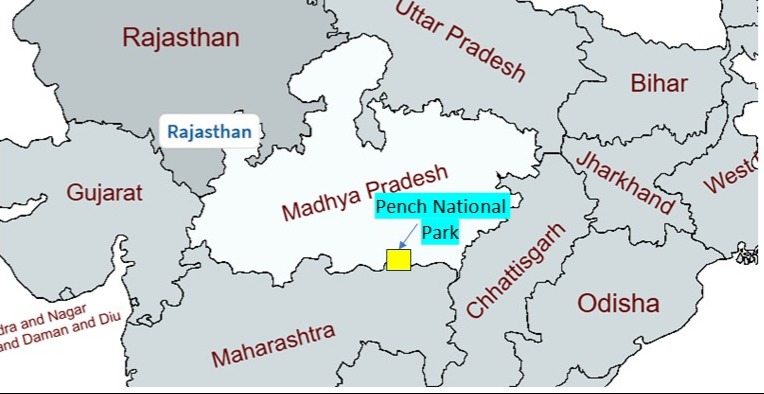
Pench National Park
This has been in news because Indian cricket team visited pench national park recently before India-NZ T20 match.
Located at southern boundary of Madhya Pradesh, bordering Maharashtra, in Seoni and Chhindwara districts. PNP forms the core are of Pench Tiger Reserve.
Pench landscape supports 100+ tigers. Growth credited to a strong prey base (chital, sambar, gaur, wild boar) and well-protected habitat.
Advanced Chemistry Cells (ACC)
Advanced Chemistry Cells (ACC) are next-generation rechargeable battery technologies with high energy density, long life cycle, high safety, and low cost, used mainly for electric vehicles (EVs), renewable energy storage, and grid applications.
ACCs go beyond conventional lithium-ion batteries and include technologies such as advanced lithium-ion, solid-state batteries, sodium-ion batteries, and other emerging chemistries.
The Government of India formally defined and promoted ACCs under the National Programme on Advanced Chemistry Cell (ACC) Battery Storage which aims to –
- Establish domestic manufacturing capacity of ACC batteries
- Reduce import dependence
- Support clean energy transition and EV adoption
- Create a globally competitive battery ecosystem in India
ACC manufacturing is supported through a Production Linked Incentive (PLI) framework based on actual energy storage capacity (GWh) and performance parameters.
Solar Magnetic Cycle
A recent study by researchers at IIT-Kanpur used long-term surface magnetic field observations to reconstruct the Sun’s internal magnetic fields, improving prediction of solar activity cycles. The model was built using 30 years of satellite data (1996–2025) from SOHO and Solar Dynamics Observatory. The findings are significant for understanding solar flares and space weather impacts on satellites and power systems.
The Sun exhibits a quasi-periodic cycle of magnetic activity of about 11 years, known as the solar cycle. Each cycle is marked by variation in the number of sunspots, solar flares, and coronal mass ejections. At the end of each 11-year cycle, the Sun’s magnetic polarity reverses, making a full magnetic cycle of ~22 years.
Superlaw Courts
The Madras High Court to employ AI to retrieve information from documents. This Artificial Intelligence (AI) tool is called “Superlaw Courts“. It is designed to locate, organize, and retrieve information strictly from documents placed before the court for a specific matter. It does not consult external sources or general knowledge; it does not draw conclusions, assess credibility, or express legal views
Leatherback Turtle
Mentioned in the context of the Great Nicobar project. It is the largest of all living turtles and is listed as ‘Vulnerable’ on the IUCN Red List. Galathea Bay south of Great Nicobar Island is its major nesting ground in India.
New START (Strategic Arms Reduction Treaty)
The news highlights the impending expiration of the New START treaty on February 5, 2026, the final remaining bilateral nuclear arms control agreement between the US and Russia, signaling increased global nuclear risk.
The New START is a legally binding agreement between the United States and the Russian Federation aimed at reducing and limiting strategic offensive arms.
- Signed in 2010, it entered into force on February 5, 2011. It was originally for 10 years and was extended in 2021 for a final 5-year period ending in 2026.
- Objective was t o maintain “Strategic Stability” through verifiable limits on nuclear arsenals and enhanced transparency.
- Verification Mechanisms:
- On-site Inspections: Allows 18 inspections per year (Type One for deployed systems; Type Two for non-deployed).
- Data Exchanges: Biannual exchange of data on the number and location of delivery systems and warheads.
- National Technical Means (NTM): Use of satellites for monitoring without interference.
Key Concepts for UPSC Prelims
- Strategic Offensive Arms: Refers to long-range nuclear delivery vehicles, specifically ICBMs (Intercontinental Ballistic Missiles), SLBMs (Submarine-Launched Ballistic Missiles), and Heavy Bombers.
- Nuclear Triad: The capability of a country to launch nuclear attacks from land (ICBMs), sea (SLBMs), and air (Strategic Bombers), ensuring a “second-strike” capability.
- Doomsday Clock: A symbolic gauge maintained by the Bulletin of the Atomic Scientists (est. 1947) representing the likelihood of man-made global catastrophe (Midnight = Catastrophe).
- Bilateral Consultative Commission (BCC): The specialized body established by New START to resolve compliance and implementation issues.
NextGenerationEU (NGEU)
NGEU is a temporary, historic economic recovery instrument designed to help EU Member States recover from the COVID-19 pandemic while driving a structural transition toward a greener and more digital economy.
- Financial Structure: It is financed by the European Commission borrowing on capital markets on behalf of the EU. This “joint borrowing” is a landmark shift, as the EU traditionally relied on direct member contributions.
- Performance-Based Mechanism: Unlike traditional grants, NGEU operates through the Recovery and Resilience Facility (RRF). Payments are made only when a country achieves specific Milestones (qualitative achievements, like passing a law) and Targets (quantitative achievements, like installing 5,000 EV chargers).
- National Recovery and Resilience Plans (NRRPs): To access funds, each member state must submit a plan detailing reforms and investments that align with EU priorities.
Key Concepts for UPSC Prelims
- Joint Debt Issuance: For the first time, the EU is issuing large-scale bonds to fund both loans and grants. The debt is backed by the “headroom” of the EU budget.
- The “Twin Transition”: The RRF mandates that all national plans must allocate at least 37% of expenditure to Climate/Green objectives and 20% to Digital transformation.
- Marshall Plan Comparison: NGEU is often compared to the post-WWII Marshall Plan due to its scale ($955 billion / €806.9 billion in current prices), though NGEU focuses more on structural climate and digital reforms.
- REPowerEU: An amendment to the NGEU framework (2023) to rapidly reduce dependence on Russian fossil fuels and accelerate the energy transition following the Ukraine conflict.