India is now the world’s largest producer of RIce. India’s rice production has reached 150.18 million tonnes compared to China’s 145.28 million tonnes. The recent focus on India becoming the world’s largest rice producer draws attention to a core agricultural geography concept: the physical and hydrological requirements of rice cultivation.
Rice is a water-intensive kharif crop whose cultivation is closely linked to specific climatic and physiographic conditions.
Rice cultivation requires:
- High temperature: generally above 25°C during the growing season
- Annual rainfall above 100 cm
- High humidity, especially during vegetative growth
- Standing water for a significant part of the crop cycle
Because of this, rice cultivation is naturally concentrated in areas where water can be easily retained or continuously supplied.
From a geographical perspective, rice thrives best in:
- Alluvial soils that are fertile and fine-textured
- Flat or gently sloping land that allows water stagnation
- River basins and floodplains, where seasonal flooding replenishes soil nutrients
This explains why rice is historically associated with monsoon Asia and river-based civilizations.
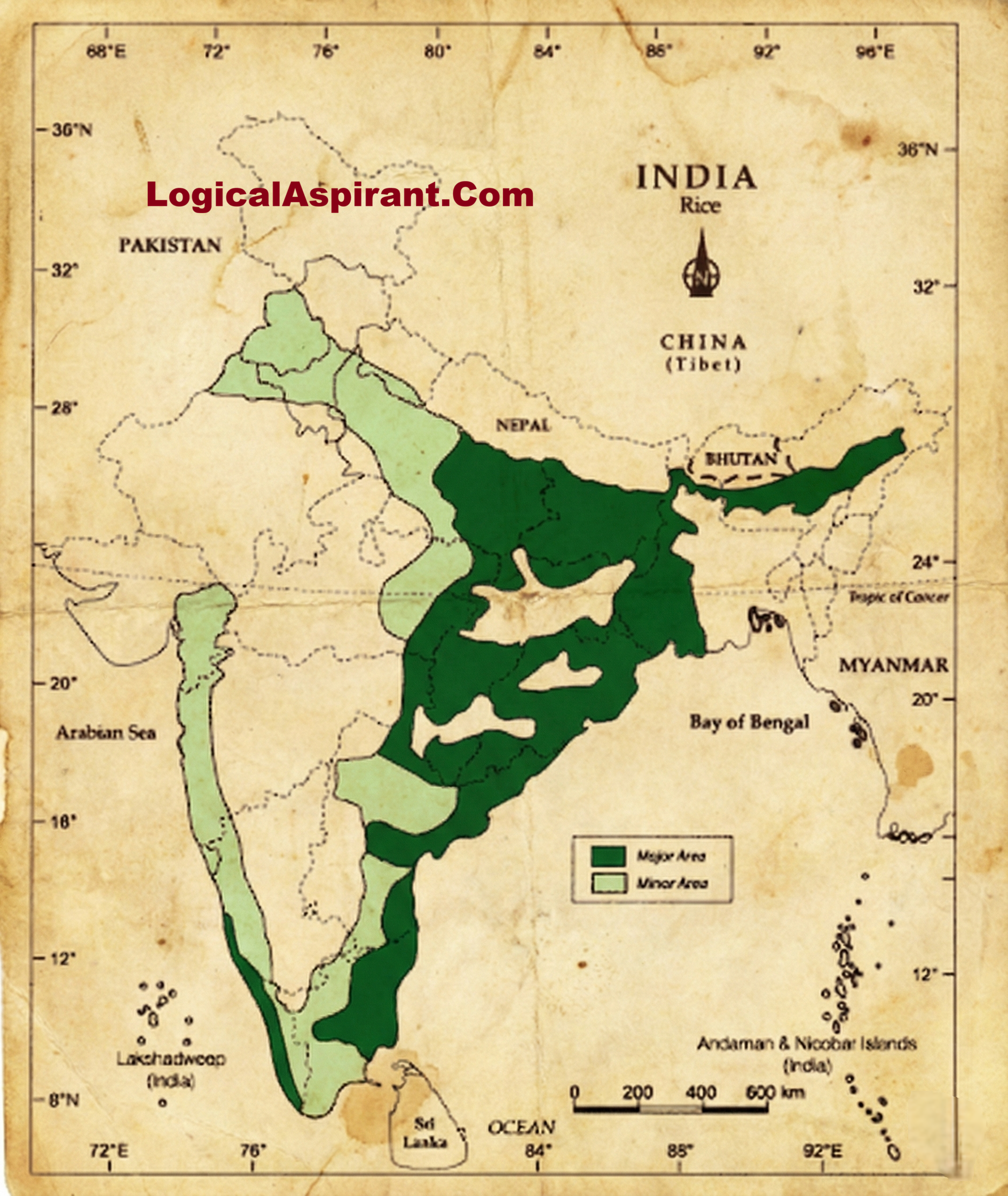
Major Rice-Growing Regions in India
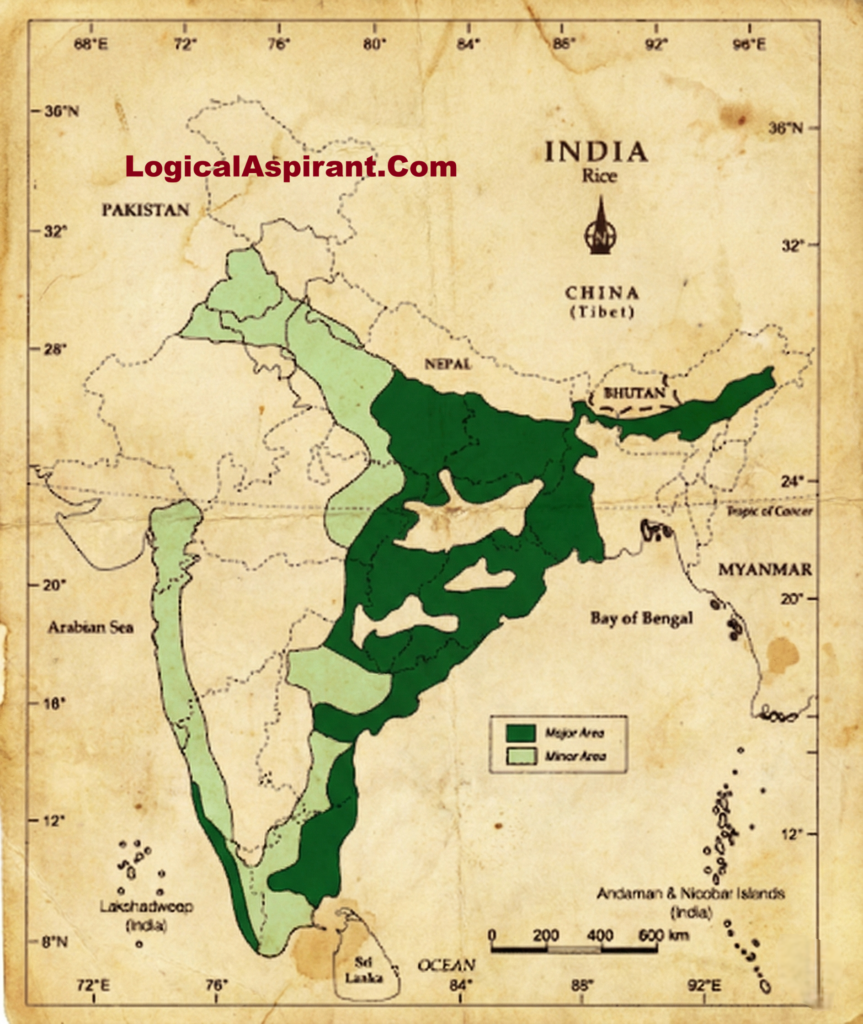
Indo-Gangetic Plains – Fertile alluvial soils, flat terrain, perennial rivers, and canal irrigation support extensive rice farming.
Eastern and North-Eastern India – Heavy monsoon rainfall, dense river networks, and traditional wet paddy methods form the core rice belt.
Coastal Plains and Deltaic Regions – Delta soils deposited by rivers like the Godavari, Krishna, Mahanadi, and Cauvery are highly suited for rice due to moisture retention and flat relief.
Peninsular India (Irrigated Tracts) – Rainfall is seasonal and uneven, so rice depends on canals, tanks, and reservoirs rather than direct rainfall.
Hilly and Plateau Regions – Rice is grown in terraced fields and valley bottoms where water can be held despite slopes.
Common Confusions
Rice vs Wheat: Rice requires standing water; wheat does not. UPSC often tests this contrast indirectly.
Rainfed vs Irrigated Rice: High production does not always mean high rainfall – Punjab and Haryana rely heavily on groundwater.
Deltaic regions ≠ Coastal only: Inland river deltas are equally important for rice.
Kharif does not mean rainfed everywhere: Irrigation can replace rainfall but increases groundwater stress.